⛺️ Cognitive biases: The tinted glasses you didn't know you were wearing.
[Founder's note: Cognitive biases are deep-rooted instinctual responses to people and situations- something that served us very well as hunters and gatherers- while spotting a prey in the grass, making quick decisions on whether to fight or flee and so on. But today, as we humans operate from a more conscious mind, it's time we let go or at least... if not become more aware of what these biases do to us.]
Happy reading! This piece was written on 8th Jan 2025, for ARC's Leadership Campfire.
Also, if you have the time, please fill out this short feedback form to let us know how we're doing. Link here.
— Adi Raheja
One Thing to Learn
Have a look at these images...
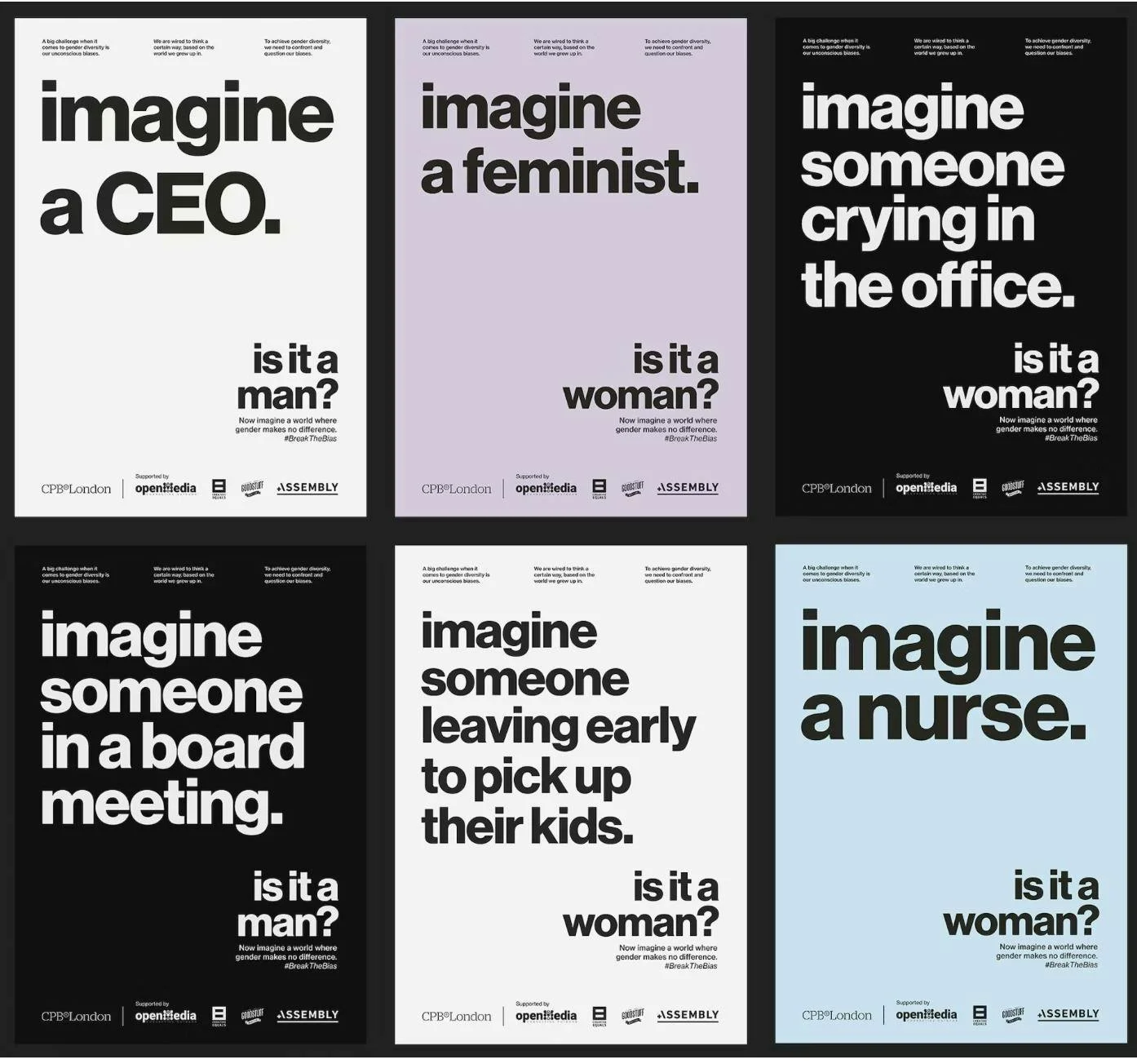
Source: CPB London
This AD campaign by CPB London is one of the quickest ways to make someone aware of their biases. While in the images above the focus is solely on gender biases, in this edition of ARC’s Leadership Campfire, we look at the phenomenon of cognitive biases from a broad lens.
What is cognitive bias?
A systematic thought process is caused by the tendency of the human brain to simplify information processing through a filter of personal experience and preferences.
Woah, that might sound a little technical (at the research team we sometimes tend to do that :p), but let’s break it down in simpler terms.
Cognitive bias is like wearing tinted sunglasses. You see the world through them, but the colour of the lenses changes how everything looks. Our brains our like those tinted sunglasses, we don’t see the world exactly as it is; instead, we see it through the “filter” of our past experiences, beliefs, and preferences.
Why should it matter to you?
In leadership, biases are patterns of thinking that can affect how you perceive situations and make decisions. And all of this often happens without the leader being aware of them. This ends up influencing how they evaluate information, solve problems and lead teams.
The “Tall Guy” Bias in Leadership
One of the most memorable examples from Malcolm Gladwell’s book ‘Blink’ is the bias toward height in male leaders. Gladwell cites data showing that an overwhelming percentage of Fortune 500 CEOs are taller than average. Specifically:
• In the U.S., the average male height is 5’9”, but the average height of CEOs is well over 6 feet.
• Only 14.5% of American men are 6 feet or taller, yet almost 60% of Fortune 500 CEOs fit this category.
Gladwell argues that this reflects a subconscious bias: we equate height with power, confidence, and leadership potential, even though these qualities have no direct correlation with someone’s ability to lead effectively. (Source)
The first step towards change is to bring awareness, below is a list of biases and how they take form.
One thing to Explore
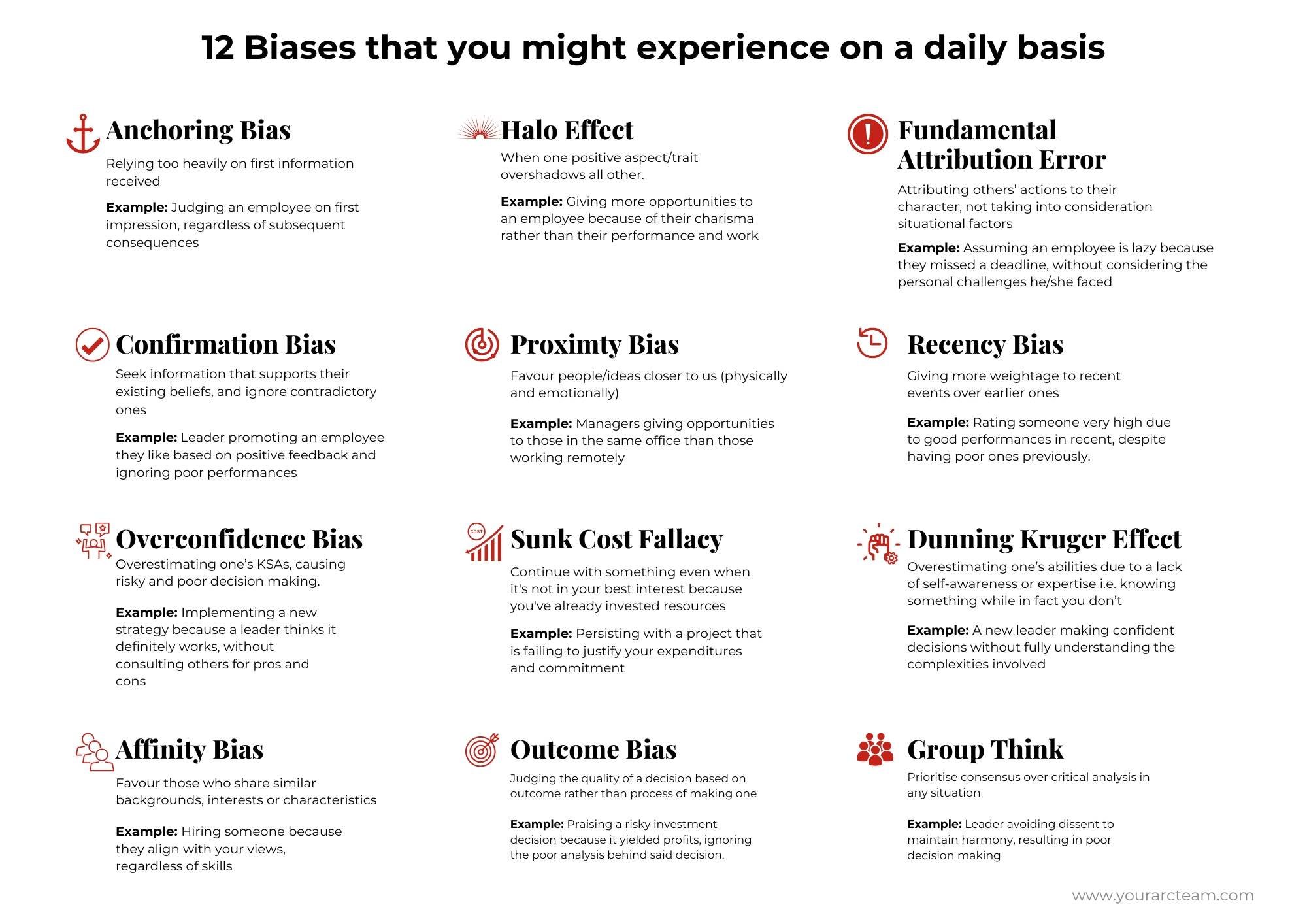
Click to Zoom In | Illustrated by Nidhi Mittal
One thing to consider
While the first half of the newsletter has been spent on berating biases, but let’s also look at it from a different perspective.
Biases are like evolutionary shortcuts. They’ve been hardwired into our DNA to help us survive and react quickly. Back in the days of hunters and gatherers, when life was precarious and danger lurked at every corner, our brains couldn’t afford to analyse every situation in detail. If a bush rustled, it was safer to assume a predator was hiding rather than wasting time wondering if it was just the wind. This bias toward caution kept us alive.

As humans evolved, the immediate fight-or-flight situations have significantly decreased, but those biases remain embedded in us. Now, instead of bushes, our “rustling leaves” might be a sudden email from the boss or a stranger’s expression. While the stakes aren’t always life or death, these biases still guide our snap judgments and gut instincts.
This evolution has also led us to become more self-aware as beings. We have gained the capacity to step back and question our biases.
So, break your mental models that no longer serve you.
Tell us how we are doing, give us feedback here.