
Why Do Civilisations Collapse? And How Is It Related To One's Values?
The Maya civilisation once inhabited Mesoamerica, presently covering central America. It flourished in architecture, mathematics and writing.
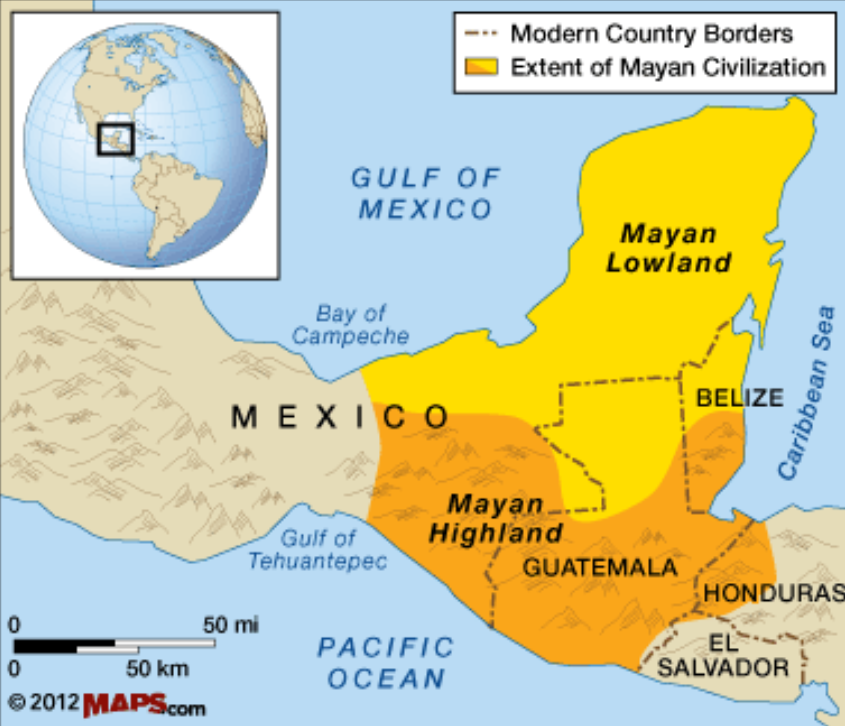
[Maya Civilisation, present-day: Mexico, Guatemala, and some portions of El Salvador.]
A common narrative tells us the Maya civilisation collapsed after falling victim to unstoppable climate change. What was once a rich civilisation faced an unfortunate fate: extreme drought, overpopulation, and eventually food and water scarcity.
On the other side, the Indus civilisation also had a significant imprint in South Asia. They faced a similar fate. The entire Indus civilisation was wiped out by drought, floods and tectonic shifts.
And there again, natural disasters carried the weight of it all.
We face similar realities around climate crises today. We notice harsher climates, dropping sea levels, and wildfires. Our focus turns to sustainability, and we promote climate activism.
Although these archaeological examples may horrify us about the acts of mother nature — lest we too fall victim to one — a civilisational collapse goes beyond bedtime scary stories.
As Sir Mortimer Wheeler points out in his book, "The fall, like the rise of a civilisation, is a highly complex operation which can only be distorted by oversimplification... there [is] no one cause of cultural collapse."
Joseph Tainter’s The Collapse of Complex Societies (1988) further perceives civilisational collapse as a reduction in social complexity, which then has a domino effect on the rest of the parts of society, climate being one of them.
Since then, archaeologists have discovered the Maya civilisation's attempts to erode their own landscape, clear farmland to accommodate a growing population, and build the famous moai statues. They even cut themselves off from access to the sea, and a possible escape route.
Similarly, emerging narratives about the Indus civilisation highlight climate change as an "indirect" cause for the civilisational collapse.
Extreme droughts had triggered an economic crisis. The economic crisis was chronic, where a century or two later, the civilisation had seemingly ceased to exist. In fact, rural settlements near Harappa had continued to exist for another 500 years.
"People were making adjustments; there was a change in their way of life," says Rita Wright of New York University.
Rita Wright argues that climate and society are intertwined on a level deeper than we expect. Climate is a combination of physiological factors, and society is an amalgamation of values, beliefs and behaviours.
A contemporary perspective on the Indus civilisation, by Gregory L. Possehl, attempts to disillusion us:
"We should stop thinking about the physical world and start looking at the fabric of society.”
Do you spot a similar state in the current affairs around the world?
Catastrophic changes in climate, but also societal. Societal how? Through the polarisation of ideologies, the resulting instability, and a complete disregard for the other.
Am I then insinuating that we could be approaching civilisational collapse? That's not my prerogative to decide, at least, not mine alone.
But I definitely have some direction that can help us evaluate.
Alan Kolata presents his reflections on civilisational collapse in the book titled "After Collapse: The Regeneration of Complex Societies". He compiles a comprehensive list of circumstances that provide a framework to visualise a civilisational collapse.
Disintegration of a Larger Political Entity
Polarising conditions that create fragmentation of a larger ideology into smaller entities. The stronger one side gets, so does the other in retaliation or fear.
Depletion of the Centralising Functions
Power and influence start getting used not to connect people as a unit or provide coordination, but instead for oppression and cultural superiority.
The centralising function loses its purpose.
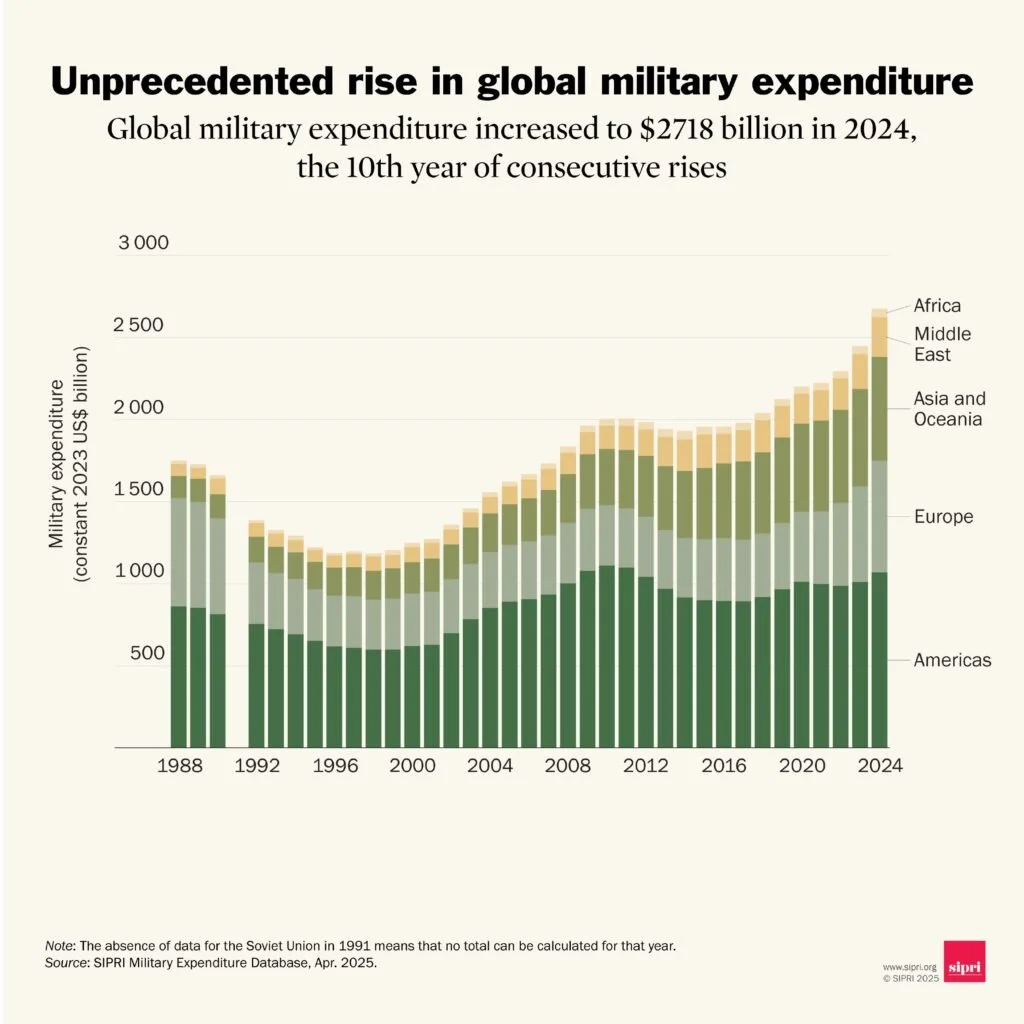
The civilisation resorts to using hegemony (using political, economic, or military power) without the need for sovereignty (legal and administrative power).
[Reference: The Unprecedented rise in global military expenditure]
Power gets exercised through influence and ideology, not judicial and legal authority.
The citizens adopt and internalise the ideologies of the dominant institutions to avoid repercussions, and even to extract some benefits from the dominant institution for themselves.
Alan Kolata says, this kind of civilisation "produces strategic subjects, not committed citizens".
Breakdown of Regional Economic Systems
Eventually, trade routes get blocked, local markets collapse, and interdependencies dissolve, creating an isolated, fragmented economy for the system.
The parts within the larger system weaken and break down, trickling down the fragmentation to the sub-parts of the system.
Abandonment of Urban Centres
People start abandoning rich, civilised urban centres due to various reasons, economic and climate instability as some of them.
Failure of Civilisational Ideologies
The big, overarching ideologies that direct a community or a civilisation towards shared goals lose their power.
Diverse ideologies start emerging, authority gets decentralised, and aversion to authoritarian regimes increases.
Earlier, there was a time when a family, a community, even a nation had a unified culture. Similar values, similar expectations from life, similar beliefs on what helps in surviving. But now, the concept of a national culture feels outdated.
With the rise of technology and globalisation, people have access to events from the opposite side of the world. They have access to history, the youth, and the societal structures beyond their immediate environments. Which means people have access to more perspectives and beliefs than ever to form independent beliefs.
Look at a family. Even members of the same family function with distinct values.
Interpersonal conflicts across domains have increased since each person expects different things from life, from society, and from themselves.
This brings me back to my previous question about approaching civilisational collapse. But perhaps, what is more important, is to understand that a civilisational collapse does not mean the end of the civilisation.
Evidence shows that the Mycenaean civilisation did not disappear or catastrophically vanish. Yes, cities were abandoned and populations fell apart, but the people lived. They would later cross paths with the Spanish in the 16th Century.
The Indus civilisation would also persist through settlements in eastern Balochistan and eastern India, hypothesising continuity between the Indus civilisation and the second wave of Indian civilisation.
A civilisational collapse is not the end of the civilisation.
It's a natural progression towards the emergence of new ideologies, acceptance of diversity, and towards evolution. But this evolution is guaranteed only if one chooses to work towards that acceptance.
Acceptance of an uncomfortable state where everyone may hold different beliefs from you, challenge you, and have the courage to expect different things from life than you. This acceptance can only begin with deep awareness: of oneself and the other.

The Value Orientation Assessment
Whatever it is, the way you tell your story online can make all the difference.
If you wish to explore that awareness today, I invite you to experience the Value Orientation Framework and Assessment:
https://yourarcteam.com/research-value-orientation-assessment
On the other hand, individuals are also free to continue conflicting with others. Dominate them enough to make them submit or to destroy them. They are free to reinforce the illusion that others' destruction guarantees their own survival.
Resources:
Book: The Great Maya Droughts by independent archaeologist Richardson B. Gill
https://aeon.co/essays/what-the-idea-of-civilisational-collapse-says-about-history
Book: After Colapse: The Regeneration of Complex Societies (Edited) by Glenn M. Schwartz and John J. Nichols
Book: Civilisations of the Indus Valley and Beyond (1966) by Sir Mortimer Wheeler
https://houseofupsc.com/world-military-expenditure-report-2024/