
The Inner Art of Making Porridge
[This piece was originally published in ARC’s Leadership Campfire- sign up here]
Wednesday, 3rd of December
An hour had passed by since the work day had started, when at 10:17 AM a cryptic message popped up on everyone's screen:
Time was blocked just before lunch for a "Shoshin and the Inner Art of Making Porridge" workshop.
Context: Every once in a while, just before lunch, we experiment with creating tiny moments where we come together to pause and reflect. This could be in the form of a mini-workshop, a teach back or even an announcement.
This time it was a workshop on making porridge, but more important... it was about Shoshin.
Shoshin is a mindset rooted in Zen Buddhism; it means to approach anything with the curiosity of a beginner, even when you're already experienced.
As a facilitator of experiential education, the task was to bring a concept to life with a here and now experience.
So when the session was just about to start, some of us waited in anticipation for a Zen Monk to walk in, head shaved, in a black robe and sandals.
Instead, there I was dressed in formals but with the heart of a monk ;)
And then the session started with simple instructions:
“In the next 20 minutes, make porridge with the ingredients on the table. Everyone participates. No bystanders.”
An induction stove, bottles of milk, oats, dates and a pateela were all ready for the cooking to start. After a relatively smooth 16 minutes, the porridge was ready and looked like a respectable breakfast option.
We kept it aside.
Because what was to follow was the porridge we were making inside of us.
Porridge making in action.
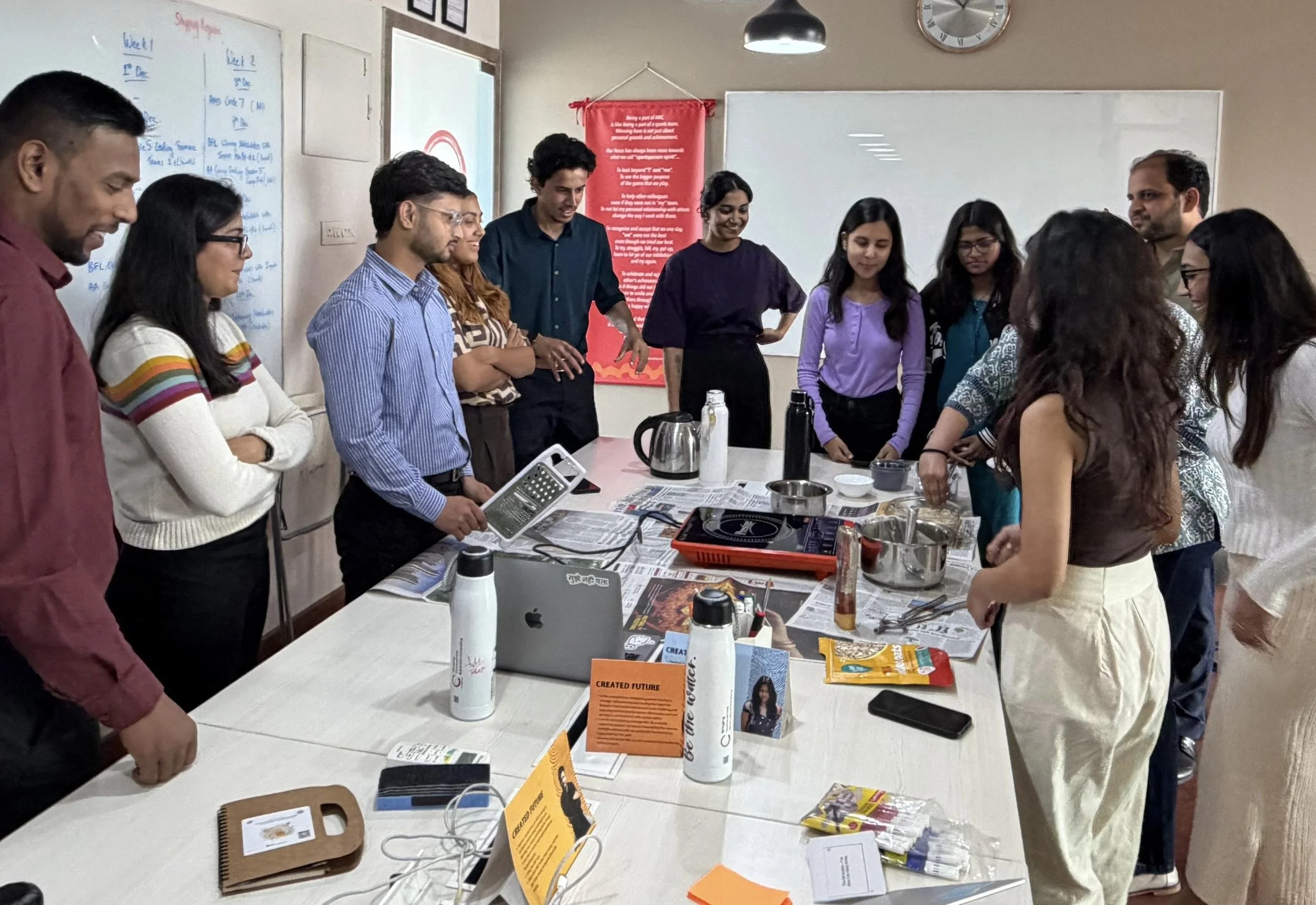
Porridge making in action
The Reflection Began
Each person received a small card with reflective questions, prompting reflection about the experience in the last 16 minutes.
Did you think of what would happen if you changed the way you stirred?
Were you aware when someone was making a mistake?
Did you hesitate to try something new?
Take a quick assessment to understand where you fall on the beginner vs expert mindset scale. Link here.
We spoke to each other if these questions popped up in our head while making the porridge... and a pattern began to reveal itself.
There were 2 ways of thinking...
The Beginner vs. The Expert's Mindset
Then came the whiteboard, with 2 columns.
A beginner’s mind is:
Curious
Open
Present
Enthusiastic
Humble
Flexible
Free of assumptions
You could see it in questions like: "What if we boil the porridge for an extra minute?”
And in the workplace, that same honesty would look like “This is new to me, can you explain a bit more?”
An expert’s mind is:
Rigid
Closed
Certain
Distracted
On autopilot
You could hear it in statements like: "I know that this is how it’s done, you don't need to add water to the porridge."
Once you read this, there comes the familiar inner voice, the ego, softly whispering:
“I’ve spent years building my expertise, does that count for nothing?”
It does.
But often, that voice is our image speaking. The part that panics at the notion of saying "I don’t know". Which then becomes a wall that we either have to climb over with a ladder or step over like a stone ~ in order to think like a beginner.
The Child with Glistening Eyes
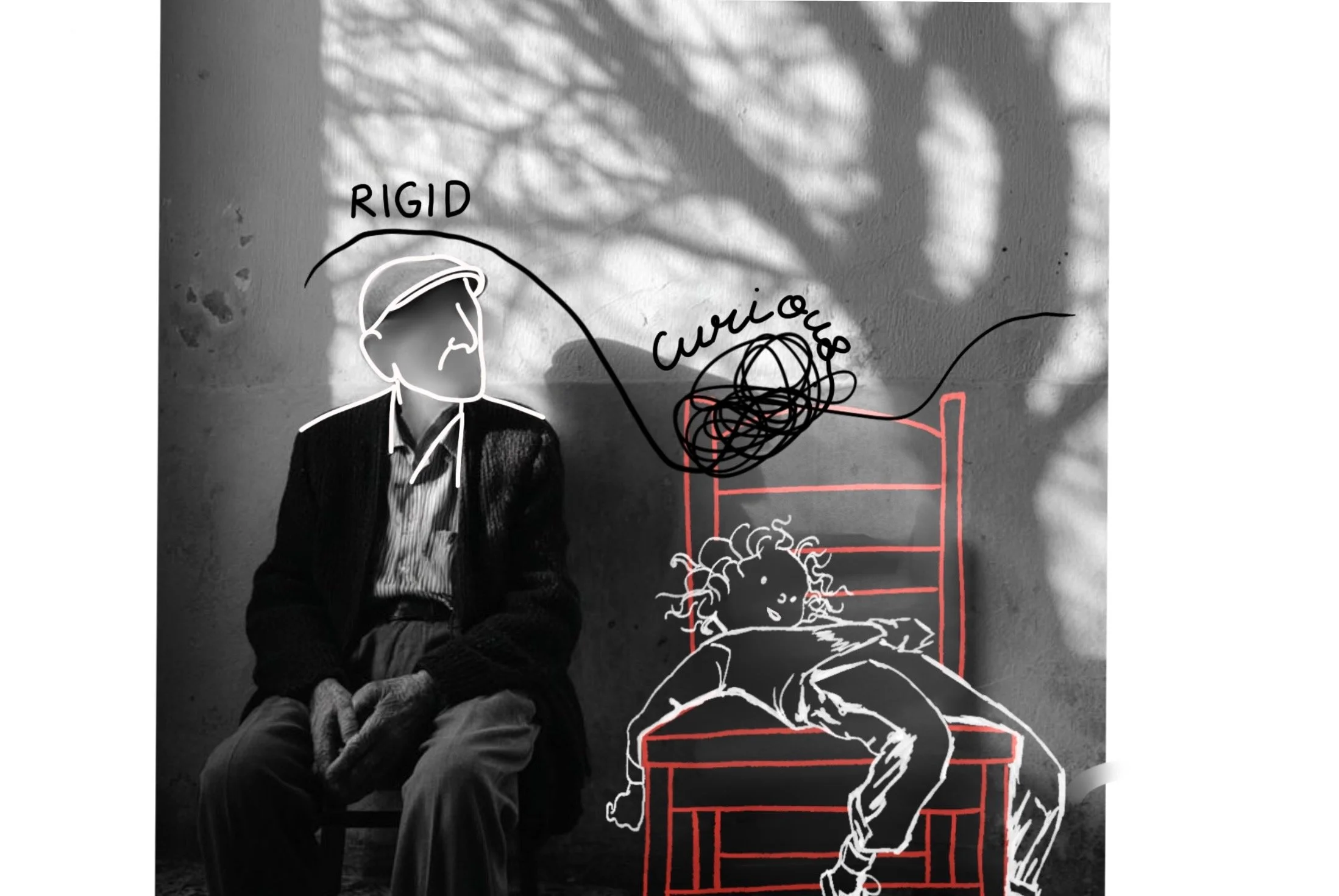
Illustrated by Nidhi Mittal
Think of a child. They plonk themselves on any surface without worrying about stains, hair or impressions. They look at the world in the most unassuming way, curious, like a beginner.
Questioning and holding everything from a space of wonder.
Now, with this, the invitation is to tap into your inner child. Not to behave like a child, but to hold both polarities within oneself: the expert and the beginner.
(Leaning slightly more toward the beginner.)
As the saying goes: “A fool thinks himself wise, but a wise man knows himself to be a fool.”
And in today's world, it is quite easy to slip into the expert mindset, with titles like manager, specialist, chief, and expert subtly whispering in your ear: "You already know this."
But one barely becomes an expert without having the beginner's mindset :)
So now, tell me one thing that you're most curious about in 2026. Comment to start a conversation like 2 beginners...
—Adi Raheja